
Rain on me
The Who - 'Love, Reign o'er Me' (Quadrophenia, 1973)

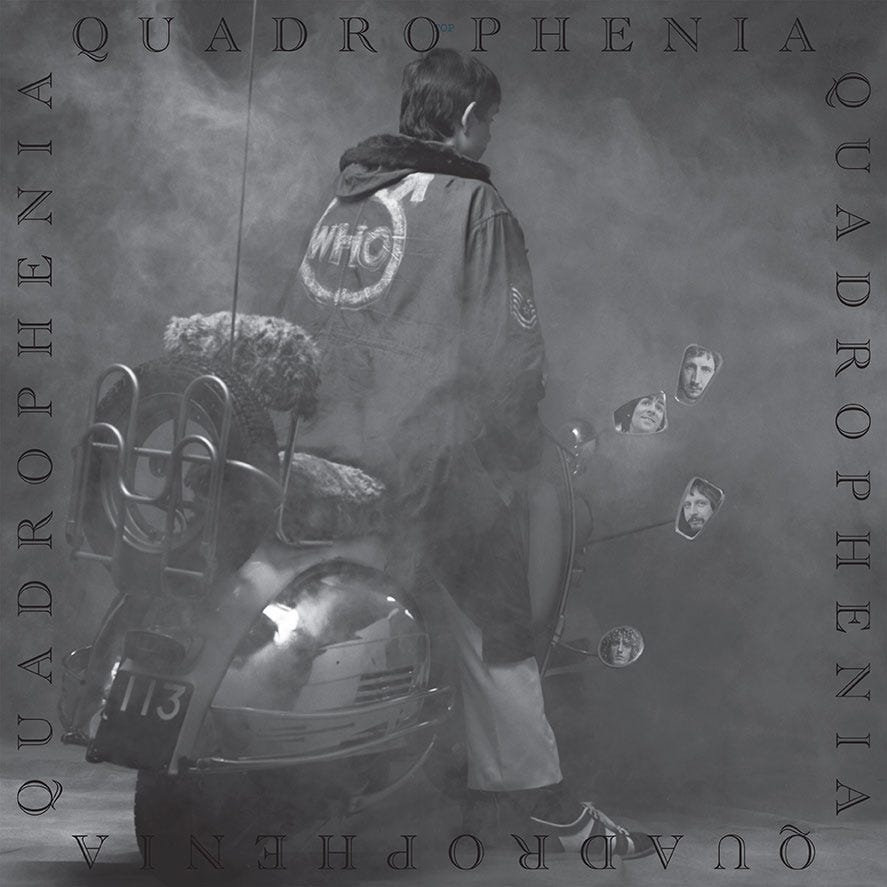
Since the start of 2026, the UK has been drowning. Not in a figurative the country needs a kick-up-the-arse way1. A stalled jet stream has steered a seemingly endless conveyor belt of Atlantic storms across the country, and the numbers have turned biblical. Reading endured thirty-one consecutive days of rain, shattering a record that had stood since 1908. Parts of Cornwall and the Midlands saw rain every single day for the first forty days of the year, enough to start offloading the lions and gorillas at Paignton Zoo onto a wooden boat. Aberdeen went twenty-one days without recording a single minute of sunshine; when the sun finally appeared on 12 February, locals described the sight of blue sky as "strange" and "shocking" on national news coverage.
We normally speak of rain as an inconvenience, a disruption—character-building grit for the British with their stiff upper lips shadowed by flimsy umbrellas. Fifty-three years ago, Pete Townshend turned it into a metaphor for grace. He placed it at the end of The Who’s Quadrophenia and asked for more.
Asking for more rain on a rainy group of islands like Britain needs a little context. By 1973, The Who had spent a decade building towards big moments like this, then smashing them apart. They had destroyed more equipment than most bands ever owned, staged a rock opera about a deaf, dumb and blind boy, and delivered the template for stadium rock in the seventies and beyond with Who’s Next.
Ten years in, Townshend was restless. Tommy had ended with a kind of transcendence. Who’s Next had wrapped its anthems in the illusion of forward motion. Townshend’s next stop was something messier: Quadrophenia.
The album is loud, multi-layered, and deliberately overstuffed until it bursts at the seams, a double record built from synthesisers, brass, sound effects and tape loops that Townshend largely assembled himself. John Entwistle’s bass drives tracks like ‘The Real Me’ with a ferocity that rocks you back on your heels. Keith Moon leans his entire upper body over every surface in front of him. Roger Daltrey belts his way through Jimmy’s identity crisis like he is auditioning for all four roles at once, which was probably the exact point. The four-way split personality at the album’s core maps onto the band members themselves, each assigned a theme song. ‘Helpless Dancer’ is Daltrey’s. ‘Bell Boy’ belongs to Moon. Entwistle gets ‘Is It In My Head?’
And ‘Love Reign O’er Me’ is Pete’s.
It’s important that the architect of all that bombast chose, as his own theme, a plea of surrender to the elements. After over an hour of bluster and mirrors (with their fractured view of identity), he sinks to the floor and kneels. Jimmy asks not for dominion but for exposure. For a band routinely accused of excess, this is as naked as they ever sound as rain and reign collapse into one another.
Townshend wrote the song at the piano, one of the first times he had composed away from the guitar. He later admitted the simplicity came from his inability to play the instrument well. His limitation shows, and there’s an argument to be made that it helps by not making a mess of complexity.
The album version builds from a fragile piano into something symphonic as the orchestration swells, Moon unleashes what might be his most breathtaking drum assault on record. The centre holds; it is a man asking to be overwhelmed. When Daltrey hits the repeated cry of the title, it is as a broken man, not one declaring a victory lap as an encore.
The spiritual dimension of the song can help us to sharpen our reading. Townshend, a devoted follower of Meher Baba, drew the title from Baba’s teaching that rain was a blessing from God and thunder was the voice of God. So we can take it that the rain in the song is not just a metaphor for the weather. Jimmy’s plea is not a secular catharsis dressed in the clothing of a rock song. It is a devotional petition that is both sincere and prostrate. Closer to prayer than performance. That makes the rain/reign pun land as more than clever wordplay; we have the earthly and the divine represented with the same syllable in speech, if not the same letters on paper.
The song predates Quadrophenia itself. Townshend originally wrote it for “Rock Is Dead — Long Live Rock!”, an abandoned autobiographical project that never cohered. A song about spiritual surrender that outlived two failed concepts before finding its home as a closer on a third. That feels apt when we are always looking for how endings find their function.
If rain, as a metaphor, normally stands for baptism, it offers a strange one here. No clean rebirth follows. The comparison everyone would reach for is The Shawshank Redemption, Andy Dufresne in the downpour, arms outstretched, face upturned. I will reach for it too, because it works, even as I acknowledge it is the most obvious thing I could say here, but by now you are expecting the picture, so here you go.
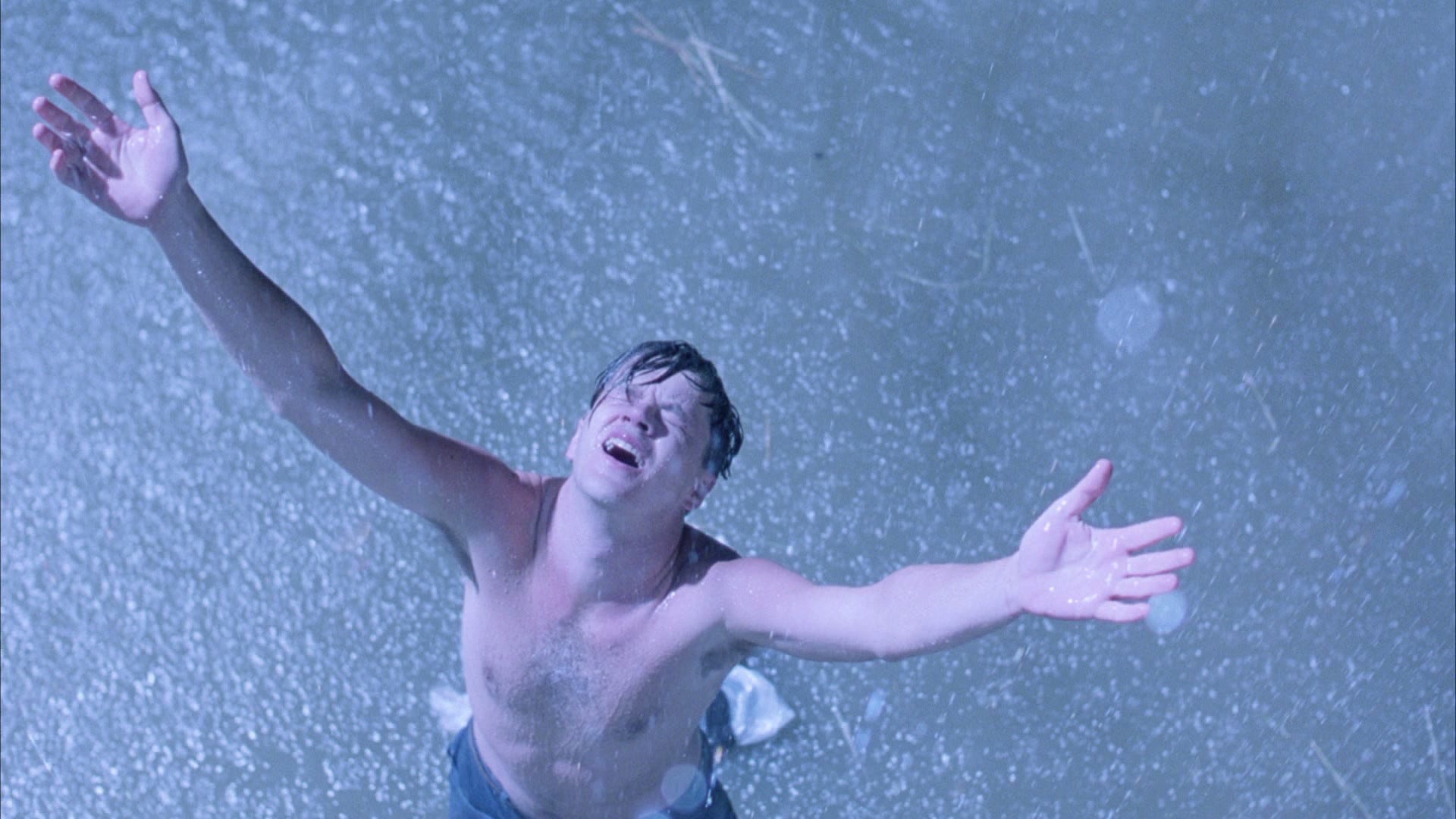
The difference is that in Darabont's vision, that scene in that 1994 film is a triumph. In Quadrophenia, the rain reads as a sign of exhaustion. The cleansing might come later. For now, Jimmy simply stands exposed to the elements.
Townshend complicated this further when he described the ending. Jimmy goes through a suicide crisis, he said. He surrenders to the inevitable2. But then Townshend added a phrase that reframes the whole thing: Jimmy is “in danger of maturing.”3 In danger of growth, as though growing up were a threat rather than the next logical destination. The ending refuses to resolve Jimmy’s story because a resolution would cheapen it. He does not become a hero all of a sudden. He does not become anything at all. He stands under the mighty power of the storm, and the curtain falls; for us, it is a Sopranos-esque cut to black4.
The refusal to tidy everything up in a resolution is part of the song’s power. As I said earlier, Tommy’s ending gave us transcendence. Who’s Next gave us forward momentum. Here, the last note hangs. The orchestra surges, the band crashes, but no neat epilogue arrives. The album closes with a question the listener must answer for themselves, alone.
It is tempting to call it the last truly great song by The Who, with apologies to the ‘Who Are You’ loyalists out there. That song from 1978, for all its swagger, does not combine scale and vulnerability, and isn’t the load-bearing wall of narrative weight in the way this one is all at once. After Quadrophenia, Townshend’s writing grew more reflective, sometimes more brittle. Moon would not see the decade out.
Townshend himself seems to know it. In a 2025 appearance on The Late Show with Stephen Colbert, he named ‘Love Reign O’er Me’ the best song he has ever written, flagging it above ‘Baba O’Riley’, above ‘Won’t Get Fooled Again’, above everything. That tells you something about what the song means to the man who wrote it, half a century on, that an architect of so many moments of thrilling bombast ranked this plea above all the other anthems.
And yet its live history tells a stranger story. The Who Concert Guide documents 539 performances across fifty-two years, from its debut on 29 October 1973 to its most recent outing in October 2025. But, the song has never been a permanent fixture. The band played it on the original Quadrophenia tour, then dropped it entirely. It resurfaced for the 1982 farewell tour, appeared at Live Aid in 1985, and has since followed a pattern not of regular rotation but of a gravitational pull to return whenever the moment demands it.
The Live Aid performance deserves a quick detour. On a day built on spectacle, of helicopters, satellite feeds, the ambition of music saving the world. The Who arrived with this. Technical glitches delayed them, and through the global broadcast’s flickering, Daltrey roared the title line into Wembley’s humid air. Here some of them were, now into their forties, revisiting a song about youthful collapse and finding, if not quite peace, then appropriate perspective.
The pattern held after that. When The Who played the Hollywood Bowl on 1 July 2002, their first concert after Entwistle’s death, they brought it back. When they returned to Cincinnati, in May 2022, forty-three years after the Riverfront Coliseum tragedy that killed eleven fans, they chose it again, projecting the names and photographs of the dead during a long, quiet introduction before the piano began. The rain falls for different reasons each time.
Maybe that is why it endures. Not because it answers what Quadrophenia poses, but because it refuses to. The album closes not with certainty, but with weather. And sometimes, especially in a country that measures its days by drizzle and cloud cover, resolving on yet more weather feels about right.
Though maybe also that as well to be fair.
Pete Townshend, “The Story of Quadrophenia,” liner notes for Quadrophenia, The Who, Track Records, 1973, LP.
Pete Townshend, liner notes for Quadrophenia, Directed by Pete Townshend, remastered edition, Polydor Records, 1996, compact disc.
The Sopranos episode “Made in America,” directed by David Chase, aired on 10 June 2007 on HBO.
Brilliant track from a great album by one of my favourite all-time groups.
Coincidentally, I am currently listening to an episode about The Who from the podcast "A History of Rock Music in 500 Songs". https://500songs.com/podcast/song-183-pinball-wizard-by-the-who-part-1-always-playing-clean/