Burn up the old, ring in the new
XTC - 'Sacrificial Bonfire' (Skylarking - 1986)
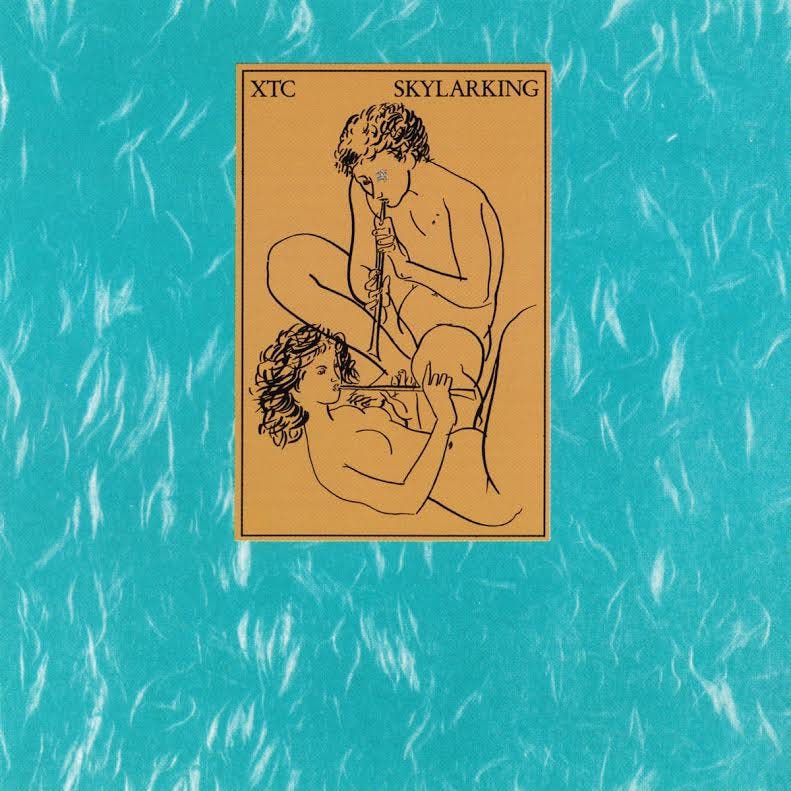
XTC were in danger of being dropped by 1986. The band’s English Settlement went top five, but Mummer, The Big Express and their side work as Dukes of Stratosphere were not paying for Virgin Records’ Christmas parties, and the label wanted them to crack America. A list of suggested producers was sent across the Atlantic and back again. A second list featured Todd Rundgren, who was at least someone the band had heard of, and guitarist Dave Gregory was a fan of his records and his production on albums like The New York Dolls’ debut and Meat Loaf’s Bat Out Of Hell.
The problem is if you are looking for someone to dig out something to appeal to a US market from a UK band, a known anglophone and Beatle obsessive may not have been the right person. The outcome was for the band to sound more English than at any point in their career. Rundgren was brought in to knock Wiltshire’s finest into shape and had his ideas about recording that didn’t chime with XTC’s Andy Partridge. Partridge had seemingly taken the role of executive producer on previous records, with the named producer on a lesser footing.
The band liked to find their groove, feel their way around a song and get in a headspace to record, whereas bassist Colin Moulding said Rundgren would say the song was done, so move on! His style of embracing technical mistakes without allowing the members a chance to fix them was also a source of contention. Partridge wanted to have a say in everything. Still, Rundgren cut, edited, and streamlined the record the way he wanted to work, recording the album in the order of the eventual tracklist - by the time it came to mixing; he sent the band away. Partridge characterised Rundgren's musical preferences as "completely contradictory to mine", suggesting a fuzz guitar overdub where Rundgren wanted a mandolin.
That was on recording the music; personality-wise it was even worse. In a 2020 review for Pitchfork Jazz Monroe relayed that;
Partridge says Rundgren had sarcasm down to “an extremely cruel art,” mocking everything from his lyrics to his trousers; when the singer flubbed a vocal take, he impatiently offered to record him a guide track. Partridge, in turn, deemed Rundgren’s keyboard skills “incredibly primitive,” nicknaming him Old Banana Fingers. Whenever the producer hulked toward the studio, weary and long-faced, the band had taken to jamming the “Munsters” theme tune.
By the end of the sessions, even XTC members were arguing. The pressure of working in rural Woodstock was getting to them. Partridge described the session as being “like one bunker with two Hitlers. We were like rams butting our heads together1” Rundgren already had a reputation for being difficult to record for, ask Badfinger and Sparks. Partridge certainly gained one from these recordings.
There, of course, was another side to all this antagonism. Partridge recognises that Todd Rundgren could be issued a challenge like making ‘The Man Who Sailed Around His Soul’ sound like Scott Walker singing a Bond theme and would come back having done that overnight. He repeated the trick by nailing the aesthetic2 they were after on the final track.
Thanks to Rundgren piecing demos together, the whole album is a very loose concept album based on a song cycle. The plot travels through a summer’s day, a wedding and marriage - even a lifetime taking in love, obsession, anguish and philosophical doubt.
‘Sacrificial Bonfire’3 begins with some gentle drumming which builds into something more bombastic, in the pastoral style we had gotten used to hearing across Skylarking. The song’s writer, Colin Moulding, spoke about the beginning of the song in an interview in 1998;
There was a touch of ‘The Sorcerer’s Apprentice’ and a bit of Arthur Brown’s ‘Fire’ in it, I suppose. But I wasn’t moralising. It was just that this was an evil piece of music and good would triumph over it. (The strings) were a bit too Vivaldi for me, but it had to go somewhere, I suppose…
The song was one of five on the record written by Moulding; having Rundgren produce may have democratised the song selection process into a more level playing field. Moulding had moved to Marlborough, and inspired by the ancient Celtic settlement; he wrote a song that focused on Iron Age sacrifices. He says in the liner notes of the expanded reissue;
I followed a path here that I had not a clue where it was going and even now I don't know too much about what it is about. I knew the chords sounded vaguely prehistoric. The first stirrings of man and what he would become -- how he learned to be greedy -- and I suppose the concept of not coming very far from his original ape-like state. Although he knows how to send a man to the moon he is still uncivilised in many ways.
The whole record has a mature, lushness that was a culmination of their mid-1980s sound but without going overboard with the psychedelia under the watch of Rundgren. There’s a darkness in the ‘Sacrificial Bonfire’ as it closes out the record, but as Partridge has said in a 1998 interview, there is a hint of the dawn to come.
Moulding continues;
Todd's arrangement on the second half of the song gives the album its finale and is truly great..... Elgar at the Albert Hall on the Last Night of the Proms. An American making us more English than we already are. It doesn’t seem right but it happened.
The song hammers home those themes; the old and the bad fading away to be replaced by the ringing in of the new. It is a closer that does what good closers do; bring together the album’s themes, close it out and set us up for something. The handing over of the baton most directly recalls our earlier look at R.E.M.’s ‘Find The River’
The record did not do well on release. England and the rest of the UK shrugged their collective shoulders, and it barely scraped the top 100 albums and the lead singles didn’t make the top 75. The record gained an extended shelf-life when ‘Dear God’ became a college radio hit in the USA and was swiftly added to their pressings. The ensuing controversy, including bomb threats to a Florida station that played it, lifted the record to XTC’s highest US chart position.
Change must be earned.
Sacrificial bonfire must burn.
We don’t know if Rundgren thought the Swindon lot were little slugs with no personality.
One issue with the sound that took until 2010 to flag was a wiring error when recording from the master, which made the album have a ‘thin’ sound. The problem was corrected on subsequent remasters, including 2016’s reversed polarity version.


Nicely arranged! I think Andy and the boys might like it better than Todd, but Rundgren deserves his highly-ironic due. Came here via a search on "Sacrificial Bonfire," which nobody really talked about but I instantly recognized it as XTC at its apex. Must confess that I don't really enjoy the album as a whole. The concept isn't really compelling and to my ears it strangely lacks for tunefulness. Don't recall it being technically hampered, but that note is interesting. I wonder if it registered subconsciously with me. If you're a massive XTC fan (and you would have to be to inspire the effort on my end), I think I've made sense of "Senses Working Overtime" -- which I've never even seen anyone attempt to do. To prospectively further tantalize you, I believe it to be the prequel to "Dear God."
Todd WAS difficult to record for, and you can add The New York Dolls to the list of Badfinger and Sparks who will attest to that notion: https://bradkyle.substack.com/p/into-the-doll-house-with-todd-rundgren